Enospa, Enoshima Island – The Unexpected Lesson in Body Acceptance I Found at a Japanese Onsen
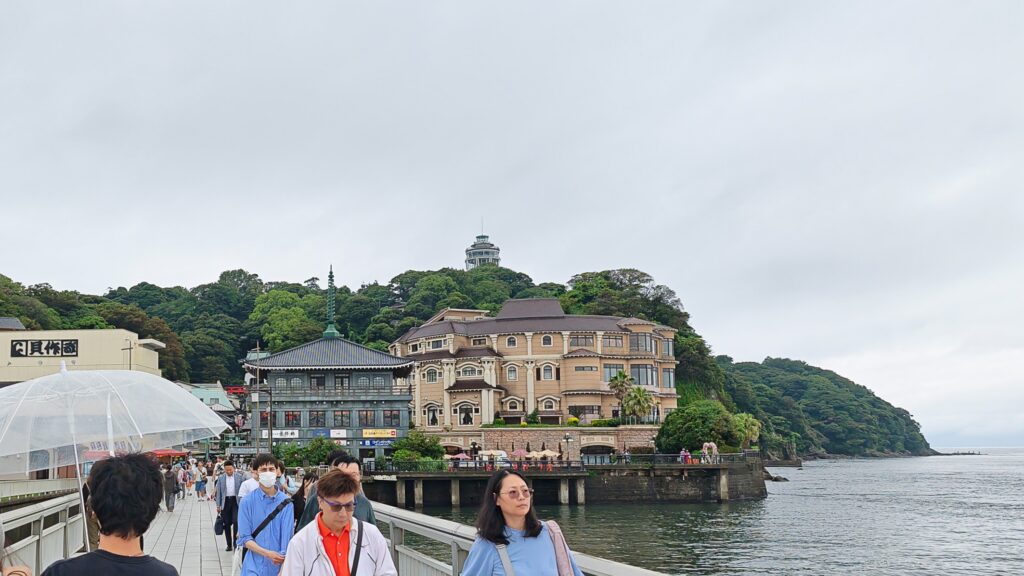
When I planned my visit to Enospa on Enoshima Island, I had a very specific picture in mind. I expected a relaxing day in a swimsuit, floating in the warm outdoor pools while taking in views of Mount Fuji across the ocean. What I hadn’t fully processed beforehand was that the traditional, mineral-rich bathhouse inside is a completely separate experience.
At Enospa, the pool area where you wear swimwear is mixed, but the traditional onsen is strictly segregated by gender. While checking in at the counter, I was confronted with a firm rule: no clothing permitted whatsoever in the women-only bathhouse.
Standing in the changing room, I faced a split-second decision: Do I stick to the regular pools, or do I actually give this a go?
To make matters slightly more nerve-wracking, I couldn’t rely on my safety net. Throughout our trip to Japan, I used Google Lens on my phone constantly to translate signs, rules, and instructions. But phones and cameras are strictly banned in the spa for obvious privacy reasons. With my phone locked away, I couldn’t scan to translate signs or double-check the rules. I only had my intuition and observation skills to help me.
In this post:
How to Onsen
Once you commit to going fully naked, there is a very specific sequence of events you have to follow before you even think about entering the hot pool.
First comes the washing station. Instead of standing under a regular shower, you sit on a small plastic or wooden stool in front of a low mirror, equipped with a handheld showerhead, basin, and toiletries. The rule here is simple: you must wash thoroughly from head to toe before entering the bath (when I say head to toe, I really mean it). The onsen water is meant for soaking and relaxing, not cleaning yourself, so entering without scrubbing first is a big no. In Enospa, the washing area was situated just to the side of the pool.
On entry, you are given a bag of towels – inside this bag is a large towel to dry yourself afterwards, a robe and a small hand towel. This is what you can use to discreetly cover yourself while walking between the changing area and clothes-free spaces. Observing others, I learned the best way to do this was to hold one end of it to my chest, so the front part of my body was covered.
While bathing, the modesty towel should never touch the water. The solution? Everyone carefully folds their towel and balances it on top of their head. Sitting in a steaming bath surrounded by women with tiny, folded towels perched on their heads is equally charming, practical, and slightly funny.
The Western Gaze
In Western culture, nudity is almost always heavily contextualised. It is either sexualised, hidden away behind changing room doors, or subjected to intense scrutiny. From a young age, we are conditioned to believe that modesty means covering up, and that showing your body requires smooth skin, pristine grooming, and a shape that matches whatever standard media is pushing that decade.
The moment I entered the room, that entire mindset began to unravel.
There was a profound absence of judgment in the space. A few women looked at me with quiet curiosity – I was, after all, the only obvious foreigner there – but it wasn’t a critical stare. It felt like a gentle, welcoming energy. Does she know the routine? Does she need guidance?
Watching the other women around me, I saw human bodies in their most honest, natural form. In the West, we are fed a constant stream of airbrushed, perfectly symmetrical images. In the onsen, I saw real life: women of all generations, mothers teaching their teenage daughters the washing steps, diverse body shapes, asymmetrical breasts, and untouched natural body hair. In a world dominated by social media filters and airbrushed standards, seeing women of all generations simply existing without pretence – whether managing body hair or natural ageing – was deeply refreshing.
A Different Kind of Modesty
We often think of modesty as hiding ourselves away, but the onsen taught me a completely different definition.
In the bathhouse, modesty isn’t about hiding out of shame. It’s about a mutual, quiet respect for the shared space. No one was flaunting their body, but equally, no one was frantically wrapping themselves in towels or scurrying between spaces in panic.
It was a naturally social and comfortable environment. Two friends sat chatting in the hot water just as people back home would over a coffee. Solo bathers sat, eyes closed in deep relaxation and reflection. There was no performance, no self-consciousness, and zero sexualisation.
What I Took Home
I didn’t stay in the water for long (it was HOT), but the short time I spent there shifted something permanent in my perspective. Walking back into the changing room to dry off and get dressed, I noticed that no one was trying to hide while pulling their clothes back on. Everyone just got changed.
For the first time in a long while, I wasn’t thinking about how my body looked from the outside. I was just appreciating what it was: normal, functional, and completely fine as it is.
Stepping out of my comfort zone – without a swimsuit to hide behind – turned out to be one of the most freeing moments of my trip. It turns out that when you strip away the pressure of Western standards, you’re left with something far better: pure, quiet body neutrality.