

Basal Body Temperature Problem Solving [6 Common Issues For Fertility Awareness Method Users]
This post contains affiliate links. To read the full policy on this, click here.
I wanted to write this post to address the main problems fertility awareness method users may come up against when it comes to taking and recording basal body temperature readings. Unfortunately, many online groups don’t seem to cover these points in much depth so I wanted to take things back to basics in case it’s helpful to anyone.
An important note before getting into this post is, if you’re low on the intention scale, always make sure you stay protected while troubleshooting charts or in times of charting uncertainty. If you’re really not sure or not confident in your method, always consult a qualified educator.
In this post:
I don’t/can’t wake up at the same time every day
This isn’t the end of the world. While many methods stipulate that temperatures should be taken at the same exact time each day, there are ways of exploring solutions to this. One of the main things is to learn whether temperatures are actually affected by the time difference or not. For some people, they are, for others, they aren’t. If you find your temperatures are affected, discuss with a fertility awareness educator in your chosen method whether they have any suggestions specific to the method, such as temperature adjustment rules.
My basal body temperature is erratic
Erratic temperatures can be caused by several things such as inconsistent lifestyle factors (some days you might drink alcohol while other days you don’t), changes in environmental temperature, sleep schedule or who you share your bed with, amongst a potentially endless list of other things. My suggestion to those dealing with zig-zagging or hard-to-interpret charts is to start by eliminating obvious things within the environment or your lifestyle. Such as, you may want to check your home thermostat to see whether your house is maintaining a consistent temperature overnight (I personally keep heating on a timer so it’s always the same time to kick in and turn off). When taking your temperature, always stick to the same location within a cycle (if you’re temping orally, ensure the thermometer is deep into the same side pocket under your tongue each time). Also, if you know you tend to have strange temperatures when alcohol is involved, giving it up for a period of time to see if it helps with the smoothness of charts.
Unfortunately, there may be some things you can’t or aren’t willing to change such as travelling for work and therefore sleeping in different beds or bed-sharing with children or a partner who works unsociable hours. For these circumstances, you may want to try prewarming your thermometer or trying a wearable thermometer option such as Tempdrop. It may also be a good idea to look into how long your thermometer reads for before providing the temperature reading – 3 minutes is the advised timescale which can either be achieved by using a traditional thermometer or with a product like the Femometer.
From my perspective as a FAM instructor, however, I appreciate that wearable technology is expensive and out of budget for many. In this scenario, I would pay particular attention to any lifestyle/environmental factors that can be changed without too much difficulty and also focus on whether your temperatures are usable against your method rules. A chart doesn’t need to be beautiful to be functional.
I keep missing temperatures
Are you someone who wakes up and instantly starts doing something on autopilot such as going to the bathroom or checking your phone? This is a common issue for many who tend to miss temperatures. My suggestion for this is to keep your thermometer on top of the first item you know you’re going to touch upon waking, for me, that’s my glasses. For those who instantly run to the bathroom or into a child’s room to check on them, however, it may just be a case of making it a goal to get as many temperatures done as possible until a habit forms (unfortunately this may mean being unable to confirm ovulation according to method rules if too many readings are missing). While there are many workarounds within the FAM community, at the end of the day, it is a method of family planning so does require a certain amount of discipline and habit formation.
I’m finding it really hard to mark my charts
Aside from not understanding the method well enough, many new users forget to round temperatures according to method rules. Not rounding temperatures can not only make charts difficult to read but they can also look choppier than they really are. Some methods instruct dropping the last digit while others have systems of rounding, always check with a suitably qualified FAM instructor in your chosen method for details on this.
I have an old thermometer in my drawer that I’m using?
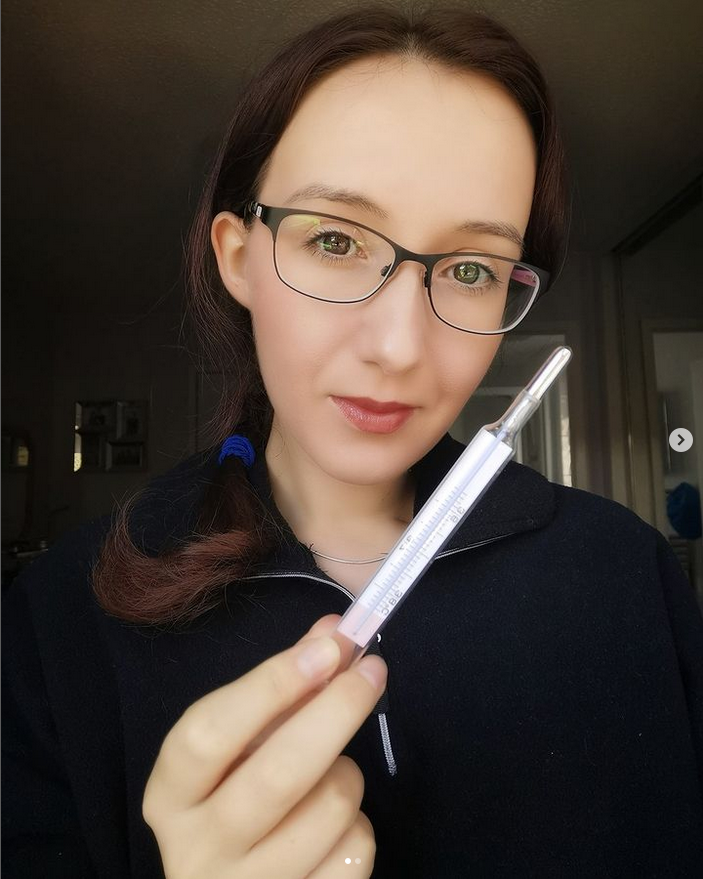
In order to practice a FAM method, you should ensure the thermometer you’re using is a basal one. Basic fever thermometers, inner ear or forehead scan models aren’t suitable as they don’t have the level of accuracy needed for charting. If you’re experiencing hard to interpret charts, check that you’ve been using a suitable basal thermometer.
My dog/child/other entity ate my thermometer
If anyone relates to this, I’m so sorry! Many people who have ‘charting helpers’ at home look to hide their thermometer in a place that is both easy for them to grab in the morning but out of reach of little hands or paws. Keeping it inside the pillowcase is a fairly popular choice from what I’ve heard.
I hope this post has helped to bring awareness to the number of potential solutions to temping problems. If you have any questions or want to raise another problem for me to answer, please comment below!


![I Asked Men What They Think About the Fertility Awareness Method [Male Perspective on Fertility Charting]](https://storiesofamillennial.com/wp-content/uploads/2022/04/2022-01-02-09.54.51-1-768x1023.jpg)


